Coming from a background as a chef and now working as a food stylist, I initially thought that food styling was just about making food as you would when feeding a table at a restaurant. That’s not entirely true—preparing food for eating is very different from preparing food for the camera. Our eyes can see details that a camera lens cannot capture. When you make food to eat, it is meant to be enjoyed immediately, but on a shoot, it can take a long time before the food is photographed.

For marketing professionals and ad agencies, food styling plays a crucial role in creating impactful visual content. Whether it’s for a restaurant campaign, a product shoot, or editorial content, the goal is to make dishes look irresistible and on-brand. Simple dishes often pose a greater challenge than elaborate ones, requiring an understanding of how food behaves over time and techniques to manipulate it for visual appeal.
A Case Study: Maple Syrup and Pancakes
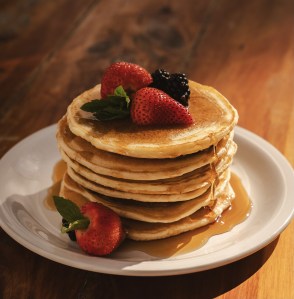
A while ago, I worked as a writer and food stylist for Pepper Publishing, a Norwegian magazine, on an assignment about maple syrup. I wrote about its history and the tradition of visiting maple sugar forests. I also developed a recipe for Poor Man’s Pudding from Quebec. To complement the story, I needed a visually stunning stack of pancakes. Nothing captures the essence of maple syrup like a tall stack of pancakes dripping with golden syrup.
Let me take you behind the scenes to show how we created a photo where maple syrup was the star—a perfect example of food styling for advertising and editorial content.
Preparation for the Shoot
Making the Pancakes
Since these pancakes were for visuals, not taste, I used a packaged pancake mix. To ensure consistency, I measured the same amount of batter for each pancake and browned them evenly. To make the stack appear fluffier and taller, I cut circles of cardboard to place between the layers.
Preparing the Syrup
For the shoot, I used an affordable maple syrup and decanted it into a container for easy pouring. A dripper tool was also on hand to create controlled drips for those perfect close-up shots.
Extra Tricks
One insider trick: I used hairspray to lightly coat the pancakes and prevent the syrup from soaking in too quickly. While this isn’t something you’d do for eating, it’s essential for preserving the pancakes’ visual appeal during a long shoot.
On the Photo Shoot
Collaboration is Key
Working with a skilled still photographer was essential. For marketing shoots, clear communication is vital to ensure the visuals align with the brand’s message. We discussed the vision in detail, ensuring the photographer could capture the exact look I was aiming for.
Styling the Scene
To enhance the composition, I styled the pancakes with complementary ingredients like fresh berries. These added vibrant colors and created a visually balanced shot. However, the focus of the photo was to make the maple syrup stand out, not the berries.
The Syrup Moment
The syrup pour was the highlight. After lightly spraying the pancakes with hairspray, I poured the syrup using a decanter. While we experimented with a dripper for precision (photo on the right side), the decanter provided the best cascading effect. Timing was critical, and the photographer was ready to capture the moment the syrup hit the stack.
Final Thoughts from a Food Stylist
As you can see, cooking for the camera is entirely different from cooking for the table. For marketing professionals and ad agencies, food styling is a powerful tool to create compelling visuals that drive engagement and sales. It combines artistry, technical knowledge, and creativity to make food look irresistible.
Food styling allows you to tell a story through visuals—whether it’s showcasing a product for an ad campaign or creating a mouthwatering image for social media. With the right techniques and attention to detail, even the simplest ingredients can become show-stopping centerpieces for your brand.
Ready to make your brand stand out with stunning food visuals? Contact me today to discuss how we can craft images that align perfectly with your brand’s message.
 Kari Svenneby is a food stylist in motion & stills photography based in Toronto.